
How many restrooms does a farm crew need?
Field sanitation rules count workers, not acres. OSHA 1928.110 sets the baseline at one toilet and handwashing setup per 20 hand-labor employees, and that facility has to sit within a quarter mile of wherever the crew is working, not back at the barn. If your crew moves across a big property during the day, that means planning more than one location, not one unit parked at the gate. A 20-person crew clearing fence line a half mile from the yard needs its own unit out there, not a walk back to headquarters. We size this the same way we would for a construction site: count heads, count distance, then place units so nobody skips the quarter mile rule because it is inconvenient. For general comparison, OSHA 1926.51(c) sets similar ratios for construction crews: one toilet for 20 workers or fewer, then one seat and one urinal per 40 as the crew grows past that. Farms with mixed crews, some hand labor and some running equipment, often end up using both standards to check their numbers. If you are not sure which bucket your operation falls into, our OSHA portable toilet requirements page walks through both, and our how many porta potties do I need guide does the head count math for you.
Standard units run $100 to $350 a day, $130 to $500 a week, or $125 to $325 a month depending on term length and how many you need placed. A single unit at a remote pasture gate for a seasonal crew is usually the monthly rate rather than daily, since most ag rentals run the length of a planting or harvest cycle, not a weekend.
What about water for handwashing in the field?
Plain water is not optional here. OSHA 1928.110 requires potable water and handwashing setups alongside the toilets, sized the same way, one per 20 hand-labor employees. That is separate from OSHA 1926.51(f)(1), which only kicks in where workers are applying pesticides, herbicides or other chemical treatments and need washing facilities for that specific exposure. A crew spraying orchard rows near Fountain, 18.2 miles south of Colorado Springs, falls under that rule directly. A crew just picking or weeding does not need the chemical-exposure standard, but still needs the baseline water and soap under 1928.110. Our handwashing station rental units cover both cases, and 29 CFR 1910.141(d)(2) is worth knowing too: soap and a way to dry hands are required, hand sanitizer alone does not satisfy it. If you run a packing shed or processing building rather than open field labor, that regulation is the one that applies, not the field sanitation rule. We also place portable sink rental units near loading docks and equipment yards where crews wash up between tasks, and hand sanitizer station rental as a supplement, never a replacement.
Where do units go on a working farm?
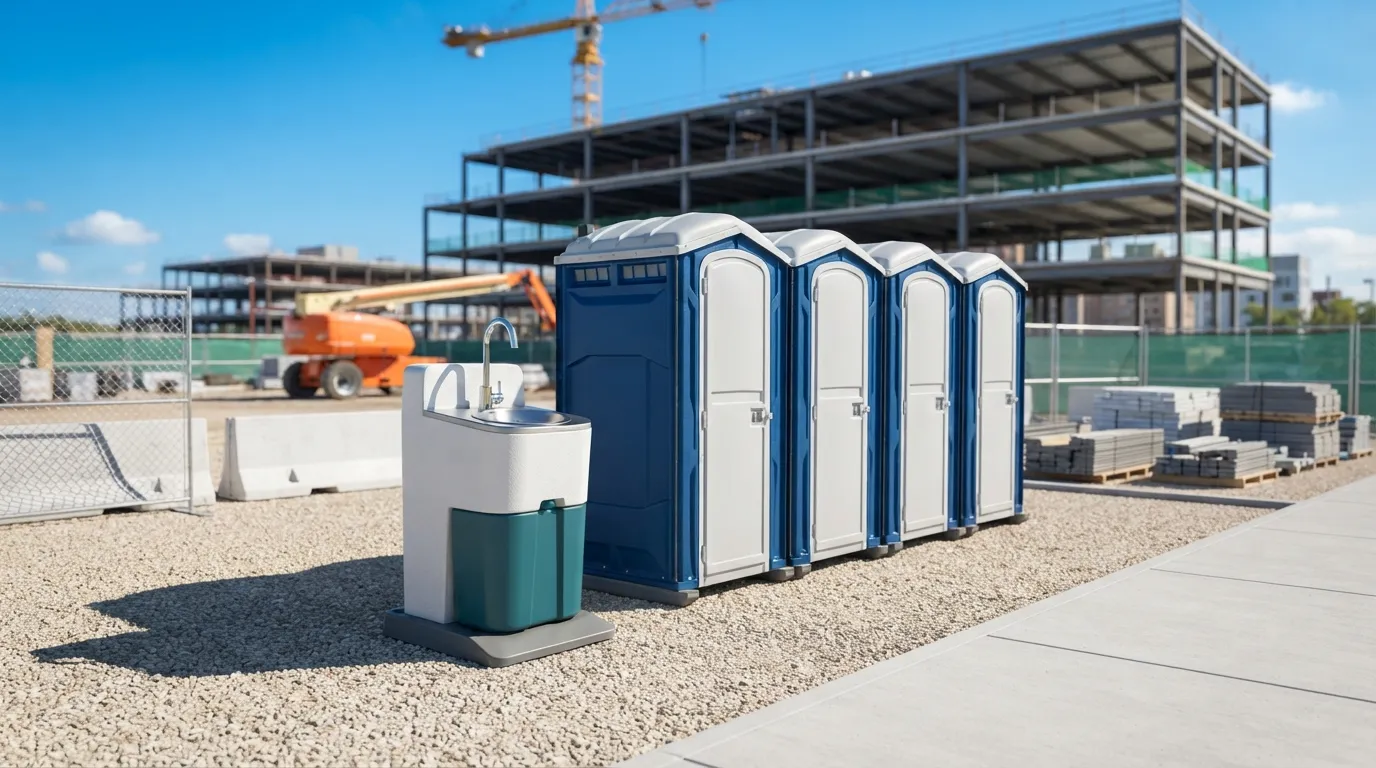
Placement on ag land is different from placement on a job site. Ground needs to be level enough that a unit will not tip, and it needs to sit somewhere a service truck can reach without driving through planted rows or across soft irrigation ground. A standard unit is about 44 by 48 inches on the ground and stands roughly 92 inches tall, small enough to fit at a gate, a barn corner, or the edge of a staging area. Service trucks need a clear path in and back out. Farms near Manitou Springs, 10.2 miles west of Colorado Springs, and out toward Monument, 17.1 miles north, often have long gravel access roads, and we plan routes before delivery day so the truck is not backing across a quarter mile of ruts. Our porta potty placement guide covers ground conditions in more depth. If your crew works through winter calving or a late harvest, check our porta potty in winter page, since cold changes servicing and freeze protection. Operations that also run a farm stand, agritourism event, or seasonal pumpkin patch should look at event restroom rental or a small restroom trailer rental instead of a single unit, since public visitors expect something closer to a real restroom. Properties with a septic system feeding the main house or a farm office should also track pumping separately; a typical tank needs service every 3 to 5 years, and our septic pumping service and how often to pump a septic tank pages cover that on its own schedule.
How often does servicing happen during harvest season?
ANSI/PSAI Z4.3 sets a baseline of one service visit per week for up to 10 users over a 40 hour week. Larger crews or longer days need more frequent visits. We adjust the schedule around your harvest calendar rather than locking every farm into the same week.
Can we rent just one unit for a small crew?
Yes. A single standard unit works for crews under 20 hand-labor workers under OSHA 1928.110, as long as it sits within a quarter mile walk of the work area. Many smaller operations around Colorado Springs run exactly this setup during planting and harvest.
Do you deliver to properties outside Colorado Springs?
Yes. We service farms out to Fort Carson, 19.0 miles south, and Air Force Academy, 17.8 miles northwest, along with everywhere between. Check our service areas page for the full list of nearby towns we reach.
What size tank does a standard unit hold?
Each standard unit carries a 60 to 70 gallon holding tank, enough for a crew of workers across a standard week under the ANSI/PSAI Z4.3 service interval. Heavier use means more frequent pumping, which we schedule directly.
Can we add a handwashing station to an existing order?
Yes. Most farm orders add at least one handwashing setup alongside the toilets to meet OSHA 1928.110. Ask about bundling it with your request a quote so delivery happens in one trip.
Next step
Get a delivery date
Tell us the address, the dates and the headcount. We size the order and confirm the route.