
How Do Porta Potties Work On a Job Site?
A standard unit is a sealed box, roughly 44 by 48 inches on the ground and about 92 inches tall, with a holding tank underneath the seat. There is no water line and no drain. The tank holds a blend of water and a chemical deodorizer that breaks down waste and knocks back odor between service visits. When a construction worker running to a porta-potty on break finishes up, everything drops straight into that tank until the service truck comes to pump it out. OSHA 1926.51(c) sets minimum toilet counts for construction sites: one unit for 20 workers or fewer, then one toilet seat and one urinal per 40 workers as the crew grows past that, and per 50 once you hit 200 or more. That is why a site foreman in Colorado Springs sizing up a crew of 35 needs a different plan than a site running 8 guys. If you are not sure where you land, how many porta potties do I need walks through the math. Placement matters too. Trucks need clear, level ground to service the unit, and our porta potty placement guide covers where units should sit relative to the work zone. For most job sites, a standard porta potty rental covers it, and construction site services bundles the rest of what a crew needs, from fencing to dumpsters.
How Do Flushable Porta Potties Work?
A deluxe flushable unit uses a small onboard freshwater tank and a foot pump or hand pump to send a rinse of water into the bowl, which pushes waste down into the same sealed holding tank a standard unit uses. Nothing connects to a sewer line. The freshwater side and the waste side stay separate until the tank is pumped. That is the whole trick: it feels like a flush, but it is really a closed system doing the same job a standard unit does, just with a rinse cycle added. Renters booking one of these for a wedding or backyard event usually want the extra comfort more than any functional need, and the deluxe flushable porta potty page has the specs. For accessible seating, an ADA accessible porta potty follows ADA Standards 304.3.1, which calls for a 60 inch turning circle inside the unit, and ADA Standards 213.2 requires at least 5 percent of a cluster of units, and never fewer than one, to be an accessible model. Camping trips near Colorado Springs use the same flush mechanism in a smaller footprint. Camping porta potties covers what a weekend at altitude actually needs.
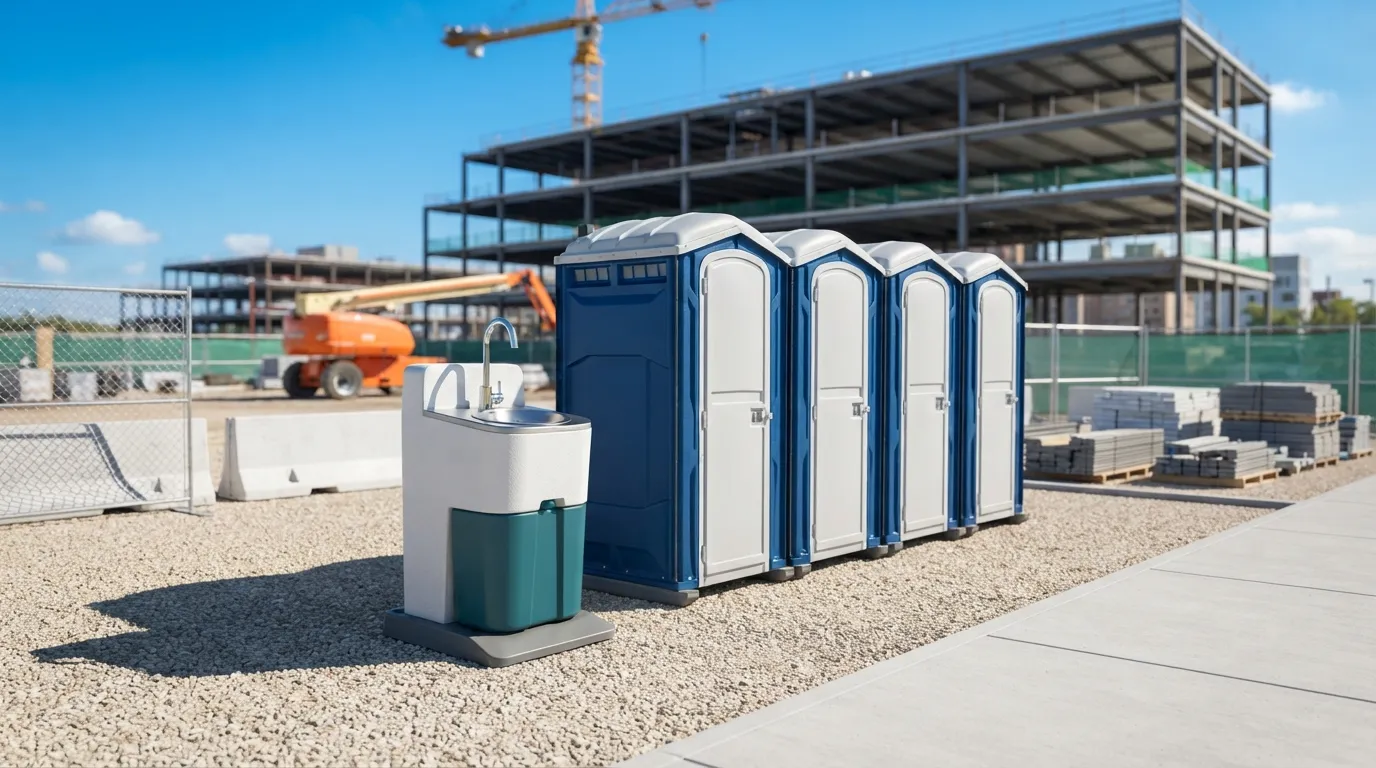
How Does a Portable Sink Work?
A portable sink runs on the same closed-loop idea as the toilet: a freshwater tank feeds the faucet, and a separate greywater tank underneath catches what drains out. There is no hookup to a water main. Most stations carry soap and a towel dispenser or air dryer built in, which matters because 29 CFR 1910.141(d)(2) requires soap and towels or a hand-drying device at washing facilities; hand sanitizer alone does not satisfy it. That standard applies indoors, but the logic carries over to any job site in Colorado Springs running a wash station next to the restrooms. Crews doing paint, coatings, herbicide or insecticide work fall under a separate rule, OSHA 1926.51(f)(1), which specifically requires washing facilities where those contaminants are present. Ag operations have their own standard: OSHA 1928.110 calls for one facility per 20 hand-labor employees, reachable within a quarter mile walk. A handwashing station rental or portable sink rental covers either scenario, and a hand sanitizer station rental works as a supplement, not a substitute.
How Often Do Porta Potties Get Serviced?
The baseline in the sanitation industry, per ANSI/PSAI Z4.3, is one service visit a week for up to 10 users over a standard 40 hour work week. Busier sites, event rentals, or units near Fort Carson, roughly 19 miles south, or Fountain, about 18.2 miles south, often need more frequent pumping depending on headcount. Service technicians pump the tank, rinse it, and restock the chemical charge and toilet paper each visit. How often are porta potties cleaned has the detail on what a service visit covers. Separately, if you are searching portable toilet chemicals near me, most of that blue liquid is a biocide and deodorizer, not the same septic tank cleaning chemical used to treat a home system, and do porta potties smell explains why the two get confused.
How much does porta potty rental cost in Colorado Springs?
A standard unit typically runs 100 to 350 dollars a day and 130 to 500 dollars for a week, with monthly rates landing between 125 and 325 dollars. See porta potty rental cost or monthly porta potty rental for a full breakdown by duration.
Do porta potties need a water hookup?
No. Standard and flushable units both run on sealed onboard tanks, not a water line. A flushable model just adds a small freshwater tank for the rinse cycle, covered on the deluxe flushable porta potty page.
Can a construction crew use a porta potty instead of building restrooms?
Yes, as long as counts follow OSHA 1926.51(c). Crews of 20 or fewer need one unit; larger crews need more per the ratio. OSHA portable toilet requirements covers the full table.
How do camping porta potties work in cold weather?
The chemical charge and tank contents can freeze below a certain point, which slows breakdown and can crack fittings. Porta potty in winter covers antifreeze additives and servicing adjustments for Colorado Springs winters.
Is a septic tank cleaning chemical the same as porta potty chemical?
No. Porta potty chemical is a biocide and deodorizer for a sealed holding tank. Septic tank treatments target a buried tank system and follow a different pumping cycle, usually every 3 to 5 years. See septic tank cleaning for that process.
Next step
Get a delivery date
Tell us the address, the dates and the headcount. We size the order and confirm the route.